
Track uranium for URG Stock by recording a clearly defined spot or term indicator, its observation date and the commercial exposure you are studying. Do not treat an annual utility purchase average, a futures quote and a uranium spot assessment as the same price.
A useful watchlist does more than display a number. It explains what the number measures and how it might reach Ur-Energy’s realized sales or future contracting opportunities.
Separate the main price categories
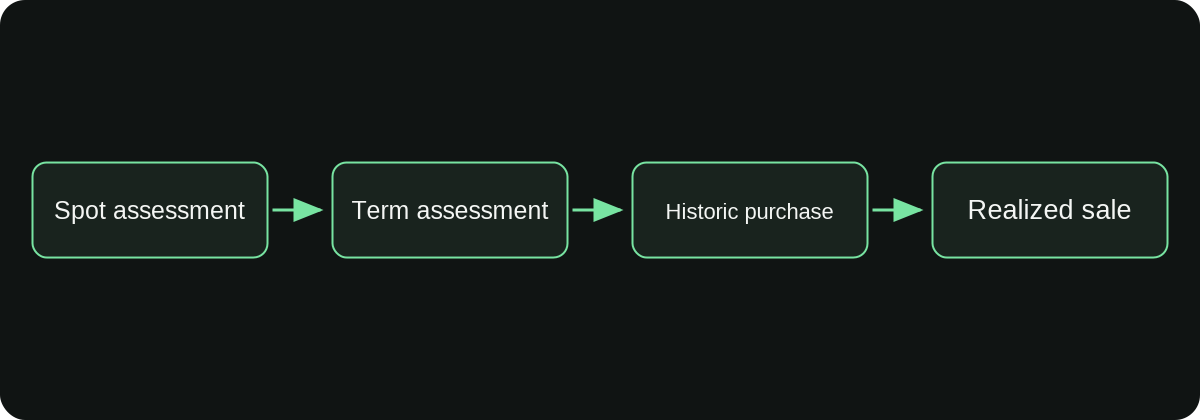
Spot indicators address near-term transactions under their provider’s methodology. Long-term indicators concern a different part of the market. Historical realized prices summarize completed deliveries under contracts that may have been negotiated much earlier.
UxC and TradeTech publish descriptions of their uranium indicators. Read the methodology and frequency before copying a quote into a model.
A futures contract adds its own maturity, liquidity and settlement reference. It may be useful for a specific purpose, but it should not automatically be labeled the physical spot market. Identify exactly what instrument a chart is displaying.
Also distinguish dollars per pound of U3O8 from other fuel-cycle prices and units. Conversion, enrichment and fabricated fuel are different products or services. A movement in one does not mechanically equal a change in the others.
Build a source record before a price chart
For each series, record provider, benchmark name, currency, unit, observation time, publication frequency and any access conditions. Note whether the figure is an assessment, transaction-based average or another calculation.
Cameco’s uranium-price page explains its industry-average series using month-end UxC and TradeTech prices. A monthly average of provider observations is not a live intraday feed.
Use a consistent source over time where possible. Switching providers or definitions mid-series can create a jump caused partly by methodology. Mark such changes rather than interpreting them as a pure market move.
Do not remove a date merely to make a widget look current. A stale but correctly labeled observation is more useful than an older figure presented as today’s price.
Treat EIA data as historical market evidence
The EIA Uranium Marketing Annual Report covers utility purchases, contract categories and other market information. The 2025 data edition was released in 2026; the publication year does not make its average purchase price a current spot quote.
This is valuable evidence for how the market actually procures material. It can help put spot headlines in perspective, especially when deliveries occur under longer-lived agreements.
When copying a table, preserve the delivery year, purchaser population, material equivalence and weighted-average definition. A national utility-purchase average is not automatically a price available to a miner signing a new contract today.
For supply and demand context, the market-balance article uses those categories separately. The tracking task here is to keep their timing and meaning intact in your watchlist.
Match the benchmark to the investment question
If the question concerns current commodity sentiment, a timely spot assessment may be relevant. If it concerns future contracting, term indicators and the company’s commercial disclosures may be more useful.
If the question concerns an already reported quarter, inspect the company’s actual realized sales price and delivery mix. A new spot number cannot retroactively change the price recognized on those completed sales.
If the question concerns a project valuation, use a scenario range consistent with the model’s timing and assumptions. A single daily quote extended over an entire mine life can create a misleading impression of certainty.
The URG–uranium relationship guide connects these choices with equity analysis. It also explains why the stock does not have a fixed percentage multiplier to any one uranium series.
Synchronize observations with company and market events
Create a dated table rather than placing unrelated lines on one chart. Include the uranium observation, URG Stock period return and material company announcements. Keep publication lags visible. Preserve official revisions as well, because a corrected historical observation can change a comparison without representing a new market transaction.
A weekly assessment released after a stock session cannot explain what investors knew earlier that day without another source of contemporaneous information. Avoid accidental look-ahead when testing a relationship.
For a simple comparison, calculate percentage changes over matched periods. If one series has no observation on a date, state how you align it rather than silently inventing a daily value.
Separate statistical description from a causal claim. Two series moving together can reflect common expectations or market conditions. A correlation calculated over one window does not prove a permanent relationship.
Check the complete cost of maintaining data
Some professional uranium information is licensed or subscription-based. Access and redistribution conditions matter if you intend to publish a continuously updating page rather than maintain a personal research sheet.
Do not scrape or republish a restricted series as though it were freely licensed. Review the provider’s terms and available public observations. Link readers to a source when your own page cannot lawfully or reliably reproduce the feed.
For a static article, disclose its observation date and direct readers to the updating source. A page can explain how to interpret prices without pretending to operate a live data service.
The same discipline applies to a stock quote. The URG price guide separates venue, session and timestamp so the commodity and equity records can be compared on a consistent basis.
Benchmark questions
Can a monthly uranium observation be carried forward until the next release?
You can display it as the latest available monthly observation, with its date. Do not describe every carried-forward day as a newly measured price or infer that the market did not change between assessments.
Does averaging two providers create a better real-time quote?
Not automatically. An average retains the underlying observations’ timing and methodology. It does not become executable or more current merely because it combines two numbers.
Should I compare URG Stock directly with a physical uranium vehicle’s share price?
First distinguish the vehicle’s uranium exposure from its premium or discount to asset value, currency and trading effects. A listed vehicle’s share price is another instrument, not a pure replacement for a defined commodity benchmark.